

Thomas Oliver
Thomas Oliver was born in Woodstock, Ontario, Canada on August 1, 1852. In his youth with only basic tools at hand, Oliver would tinker and build various devices on his father’s farm such as windmills and threshing machines. Following the death of his mother in his early adulthood, Oliver relocated to the United States, specifically Lansing, Iowa, with his wife and children.
Oliver soon became a Methodist Circuit Rider for the Upper Iowa Conference of the Methodist Episcopal Church. Now a reverend, Oliver traveled to various cities in Iowa to preach. In 1888, during his travels, Reverend Oliver was at a bank in DeWitt, where he spotted a stenographer using a blind-writing typewriter (the typist could not see what was being typed) and observed its inefficient, upside-down mechanics. Oliver became inspired to create a better visible writing machine, specifically to print his sermons.

In 1874, Thomas Oliver married Mary Ann Eddy in Paris, Ontario, Canada.
Later in 1888, Oliver began prototyping using crude and simple materials, including wire devices, strips of tin cans, and rubber. The typebars were arranged in a pivoting arc with a hammer mounted to strike them against the platen. This early design also featured an ink roller instead of ribbon spools. On August 26, 1890, Oliver filed his first typewriter patent, which featured the pivoting typebar arc design.

Oliver’s pivoting arc typebar design
In 1891, Oliver developed his second prototype alongside two machinists. The pivoting arc typebar design of this prototype proved unsuccessful, so Oliver continued to search for a better alternative. He eventually came up with the famous downstrike typebar design while he was in his study reading a book on machinery. He fell asleep in his chair and awoke shortly after, jumping and shouting “eureka” to his wife as he began to sketch a U-shaped typebar he saw in his dreams. He went to Dubuque to get watch and clock springs to make the typebars for a prototype model, spending months perfecting this new downstrike mechanism.
On September 12, 1892, Oliver filed his second typewriter patent, now featuring the downstrike typebars. Once satisfied, he took his prototype to exhibit in the Noyes art store in Dubuque. Large crowds gathered, as the value of the machine was exemplified. Oliver eventually raised enough capital to organize a stock company.
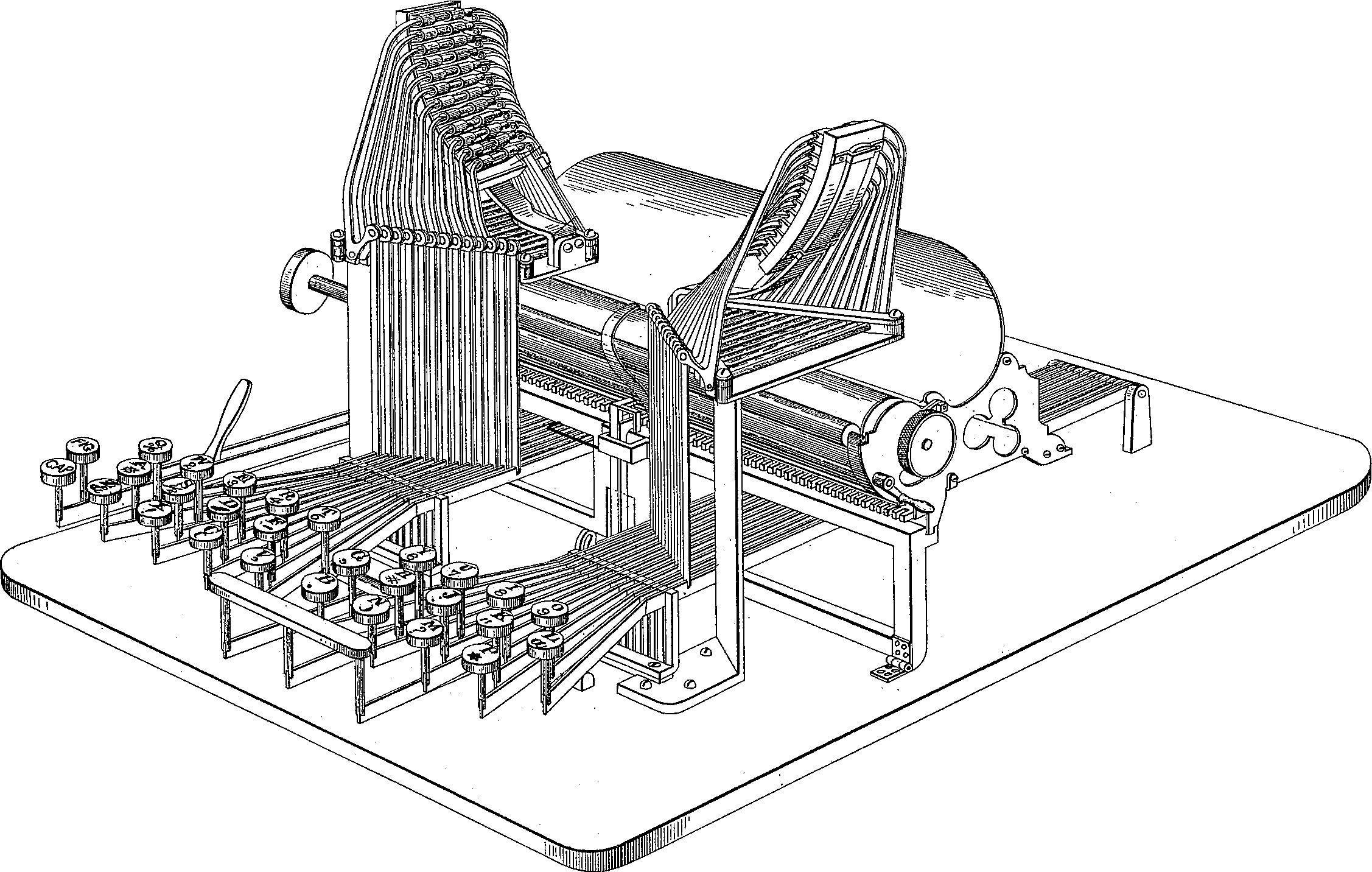
Oliver’s U-shaped typebar design on a rectangular base

Thomas Oliver

By this time, Oliver was residing in Epworth, Iowa, where he had been developing the typewriter. The upstairs of his residence was utilized as a makeshift factory, where five machinists were employed. With the combined efforts of Thomas Oliver and these employees, 12 typewriters were produced over the course of a year. The bases of the machines were cast by the Adams foundry while other parts were furnished by more local industries.

Oliver’s Epworth residence
On September 19, 1893, Oliver filed another typewriter patent featuring the downstrike typebars. The machine of this patent possesses the final shape of the Oliver No. 1 base and includes ribbon spools.

Oliver No. 1 illustration in U.S. Patent No. 542,275

The first factory of the Oliver typewriter
To increase production, an application was submitted by Oliver to city council for assistance. In response, a two-story brick factory was constructed in 1894, just north of the Illinois Central railroad tracks in Epworth. This new factory employed 16 workers once it was completed. They were now able to produce six machines per week.

Oliver No. 1 illustration
On September 18, 1895, Thomas Oliver and capitalist Douglas Smith went to the Racine Business Men’s association in Racine, Wisconsin to secure funding for a larger manufacturing plant. Oliver and Smith wanted to relocate to Wisconsin because of the availability of skilled machinists. They presented the Oliver typewriter and received very positive. feedback. On October 15, 1895, the committee met again to discuss manufacturing the Oliver machines. Two days later, the committee reported that they are in favor of manufacturing in Racine, as they believed the machine was superior to all other typewriters on the market. The committee proposed the people of Racine subscribe and pay for capital stock. Oliver and other stockholders would turn over the patents and good will for the new company’s capital stock, and Oliver would receive a royalty on each typewriter sold.
By December 6, 1895, the Wisconsin capitalists planned to rebuild the Scotford plant in Kenosha, Wisconsin to use as the Oliver factory. This plant was two stories tall, 12,000 square feet, and would be equipped with a 50-horsepower boiler and engine. Fifty skilled machinists would be employed by the following spring. Zalmon Gilbert Simmons, Sr., founder of the Northwestern Wire Mattress Company, was funding sixty percent, and thirty-seven percent was to be funded by the citizens of Kenosha. Only the remaining three percent stood in the way of securing the deal.

Tappan Steam Pump Company
Before officially closing on the Wisconsin deal, Oliver and machinist Charles Fay went to Woodstock, Illinois, to seek out one more potential relocation opportunity. In 1893, an 80-by-200-foot brick factory was built for the Tappan Steam Pump Company. However, this company only lasted two years. In order to fill the empty factory, a deal was offered by the Woodstock Public Improvement Association. If The Oliver Typewriter Company stayed in Woodstock for at least five years and employed 150 workers, the factory would be donated to the company. Oliver readily accepted this offer, and the Kenosha plan was forgotten.
On December 29, 1895, The Oliver Typewriter Company was incorporated as a new stock company. On January 14, 1896, the company took possession of the Woodstock factory, and on January 16, Oliver's machinery was shipped from Epworth to Woodstock.
The Woodstock factory first opened with 80 employees, 15 of which were from the Epworth factory. Production was initially slow, but significantly increased over the years to come. By 1901, over 200 employees operated the factory, often working into the evenings to keep up production.

Workers leaving the Oliver typewriter factory for lunch

Reverend Thomas Oliver

Oliver's cotton harvester
In addition to the eponymous typewriter, Oliver also created other inventions. On February 6, 1909, an improved cotton harvester prototype by Oliver was to be shipped from Chicago to Pine Bluff, Arkansas where it would be demonstrated by Oliver the following week.
On the afternoon of February 9, 1909, Oliver and his second wife, Danish immigrant Olga Ottonia Christiane Nielson, arrived at the Argyle train station in Chicago to travel to Arkansas. However, the pair never managed to board the train. Thomas Oliver suddenly collapsed and died in his wife’s arms due to heart failure at 56 years of age.
The following Thursday afternoon, The Oliver Typewriter Company held a memorial in the factory for the late inventor. The superintendent, his assistants, around 1,000 employees, and several hundred citizens of Woodstock attended. On February 14, 1909, Oliver’s body was delivered to Graceland Cemetery in Chicago.
George Mower
Edwin Goddard


After the death of Reverend Thomas Oliver, The Oliver Typewriter Company continued growing and producing machines. However, sales began declining during World War I, forcing The Oliver Typewriter Company to adopt a mail-order sales strategy. Beginning March 1, 1917, customers now had the option to buy typewriters in installments. This approach initially boosted sales, making the Oliver No. 9 the most-produced model, with factory output peaking at 325 machines per day. However, the Depression of 1920-1921 caused many customers to default on payments, forcing the company to repossess and resell machines at a loss. On June 1, 1927, The Oliver Typewriter Company officially announced the closure of its business. Most of the company’s assets were purchased by Oliver Typewriter Company director George Mower and relocated to England, while surplus machines and equipment were later auctioned off.
On May 5, 1928, the Oliver Typewriter Manufacturing Company, informally known as British Oliver, was incorporated as a public company in London, with its factory located in Croydon. Initially, The Oliver Typewriter (Sales) Company held exclusive sales rights in Britain and Ireland, but British Oliver later began selling machines directly. By July 1928, British Oliver was producing a batch of 3,000 typewriters, and by February 1929, it secured a contract to supply typewriters to the stationery office of King George V. The Oliver Typewriter (Sales) Company also ordered 20,000 machines. Due to workforce shortages in England’s young typewriter industry, British Oliver rebranded European models, assembling some in Croydon. However, downstrike machine production continued after the British Government placed an order for 14,390 Oliver No. 15 machines during World War II.
After Mower's death, Edwin Goddard became chairman of the Oliver Typewriter Manufacturing Company. By December 1942, Goddard developed a plan to produce a truly British-manufactured Oliver portable after the end of World War II. However, the company began to struggle financially, and funds had to be borrowed to upgrade their machinery. In September 1948, a goal was set to acquire additional revenue to raise the company’s capital. A plan to issue 780,000 company shares was delayed because a large order of Oliver typewriters was placed for United States Air Force bases in Britain and Continental Europe. As a result, the shares were not issued until October 1952.
In June 1956, British Oliver acquired two engineering businesses and a catering equipment manufacturer, ultimately leading to a 450% loss from 1955 to 1957. In April 1958, the company was renamed Oliver Industries Ltd., becoming an industrial holding company. After acquiring Byron Business Machines and selling Byron portables, Oliver initially saw profit. However, by July 1959, typewriter production ceased, and the company soon liquidated, ending the 67-year run of Oliver typewriters.
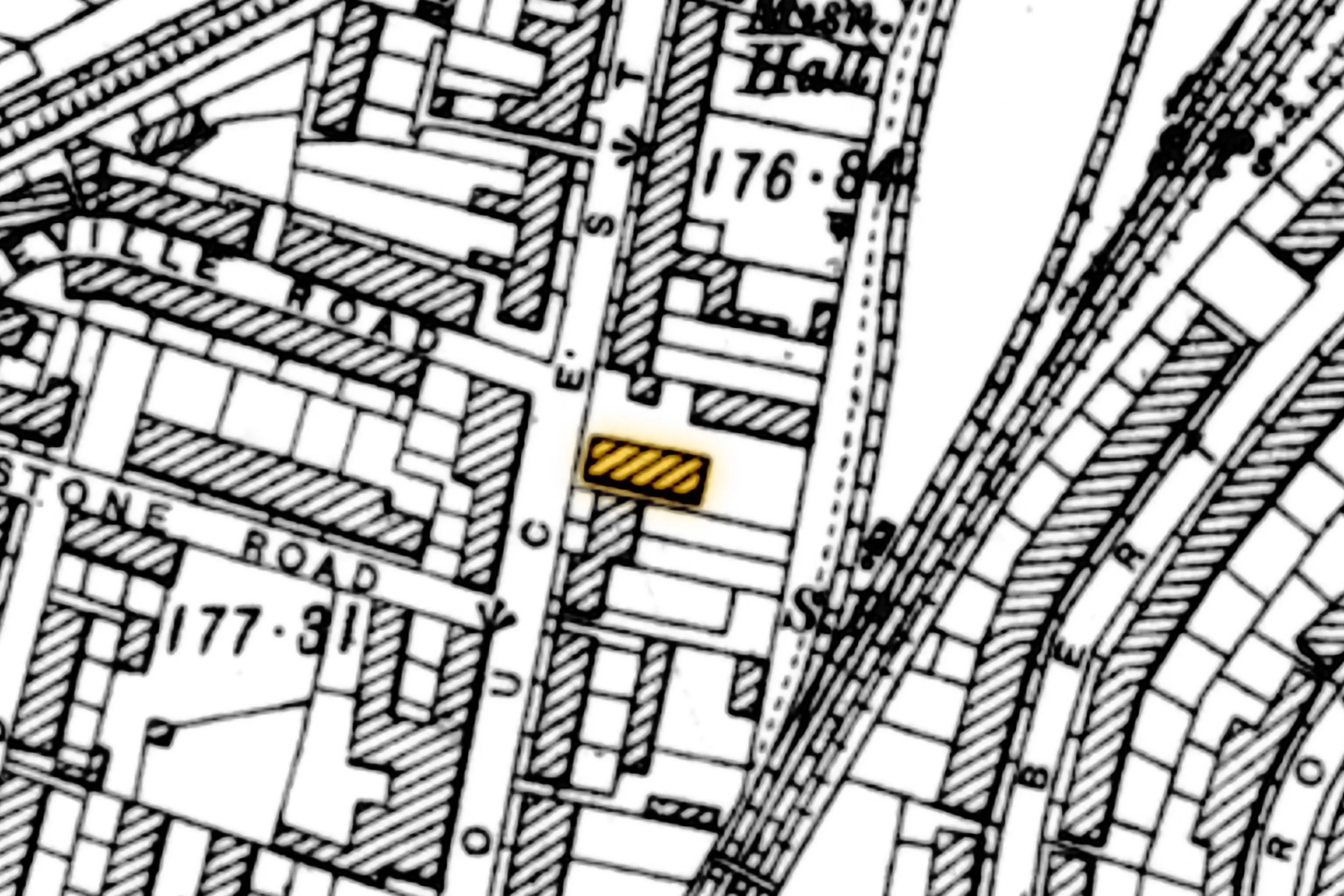
The British Oliver factory in Croydon